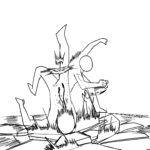
Inking is the stage where your loose, messy pencil sketches are transformed into sharp, permanent, and dramatic lines. Historically, mangakas used physical G-pens and dipping ink. Today, whether you ink traditionally on paper or digitally on a tablet, the goal remains the same: creating clean, confident, and expressive line art.1. Control Your Line Weight (Thickness)Line weight is the secret to giving your drawings a 3D depth. A drawing where every line is the exact same thickness looks flat and boring.Thicker Lines: Use thicker lines for the outer contours of characters, areas in shadow, and where objects overlap.Thinner Lines: Use thin, delicate lines for internal details, facial features, hair strands, and areas facing the light source.2. Lock Your Shoulder and Elbow, Not Your WristIf you draw long lines using only your fingers or wrist, your lines will likely look shaky, wobbly, and uneven.For long, sweeping curves (like hair or outer body contours), pull the stroke from your elbow or shoulder while keeping your wrist locked.Use your wrist only for tiny, controlled details like eyes and facial expressions.3. Practice Ghost StrokesBefore your pen touches the paper or screen, hover your hand above it and practice the motion of the stroke in the air. Once you feel the natural flow, quickly drop the pen and execute the stroke in one fast, confident swipe. Speed creates smooth lines; hesitating creates wobbly lines.ConclusionDo not get discouraged if your first few attempts at inking look messy. Inking requires hand-eye coordination and muscle memory that can only be built over time. Keep practicing, vary your line weights, and draw with confidence!